


Talk: TBEX Donegal
Speaker: Luis Peña (@BackpackingLuis)
Introduction & Context (TBEX Donegal + Why I Chose This Talk)
I’ve now met Luis Peña—better known online as BackpackingLuis—at three different TBEX events: San Sebastián, Puerto Rico, and now Donegal. Each time, what stands out is not just his travel experience, but the way he thinks. His approach is logical, structured, and grounded in systems rather than hype.
When I saw he was giving a talk on building sustainable income through social media, I knew I didn’t want to become a full-time influencer. That’s not my goal. What I did want was to understand how social media could more effectively drive traffic to my blog, strengthen The Cajun Traveler as a brand, and create long-term stability.
This session delivered exactly that.
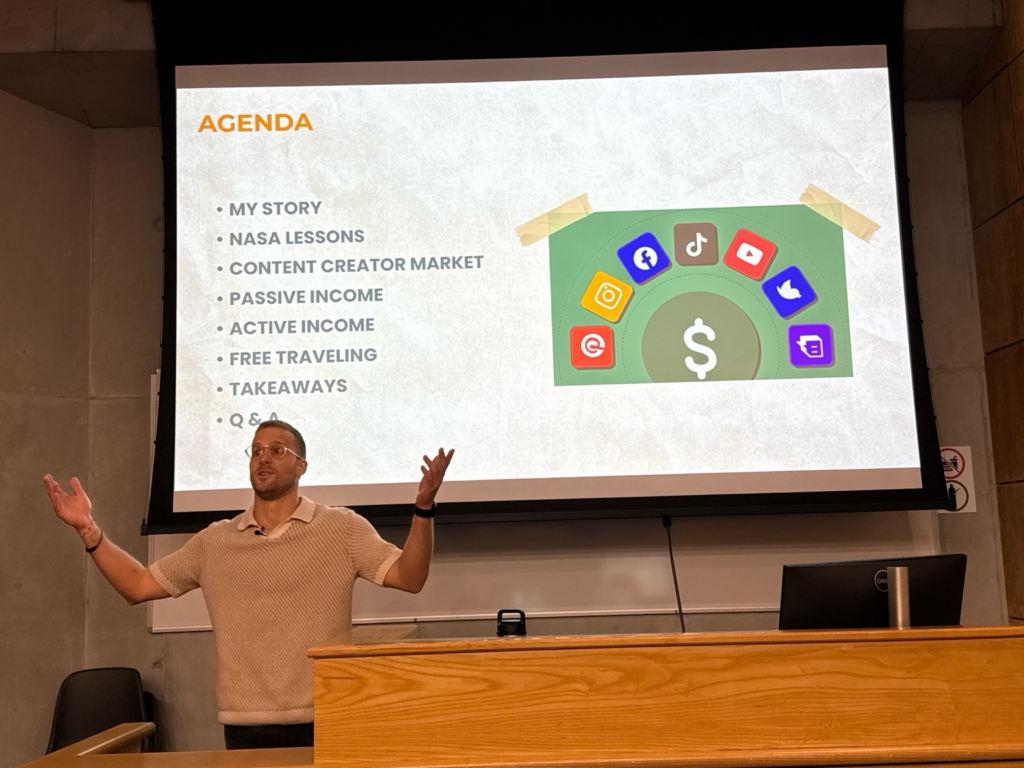
Luis Peña’s Background & Story
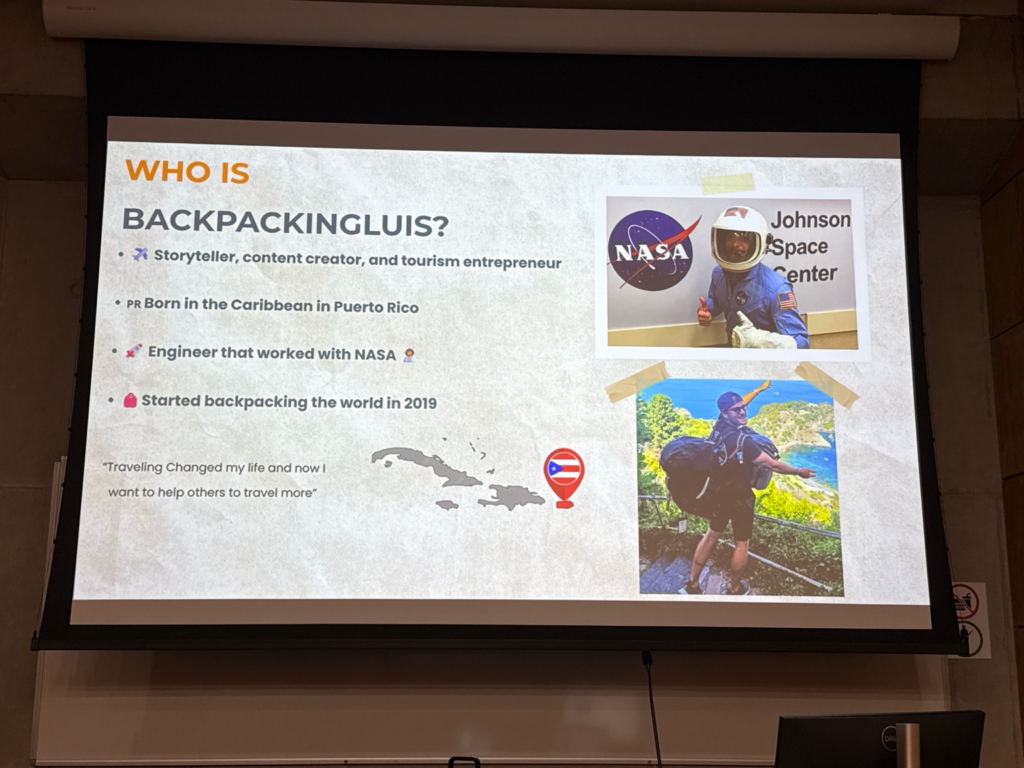
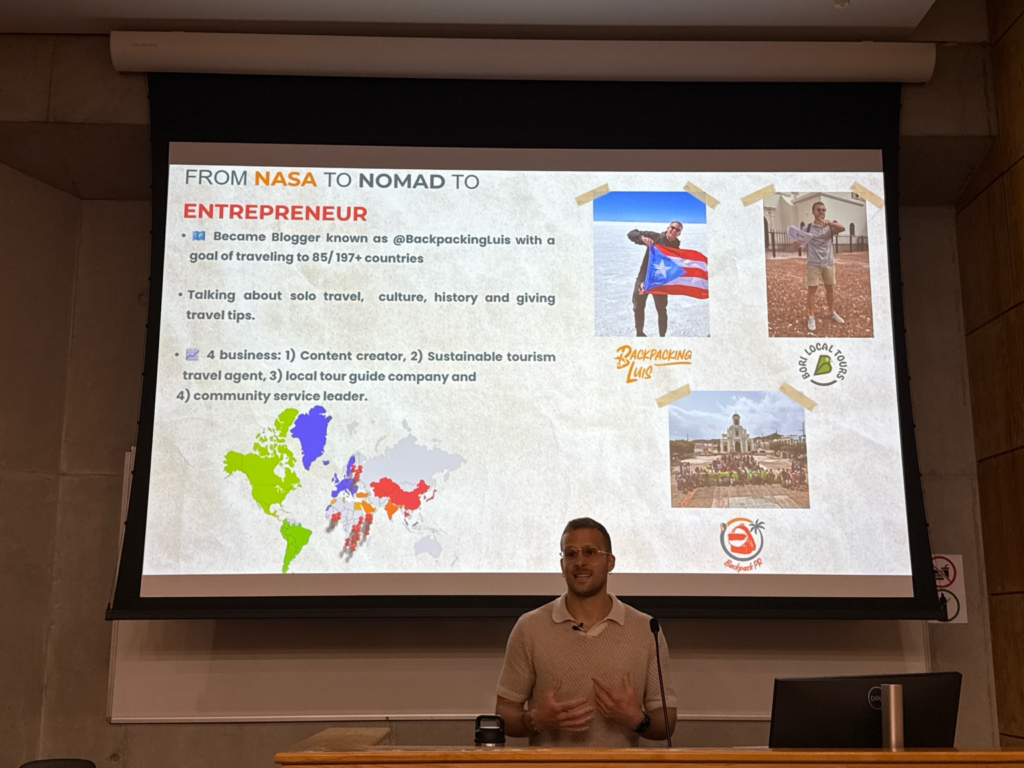
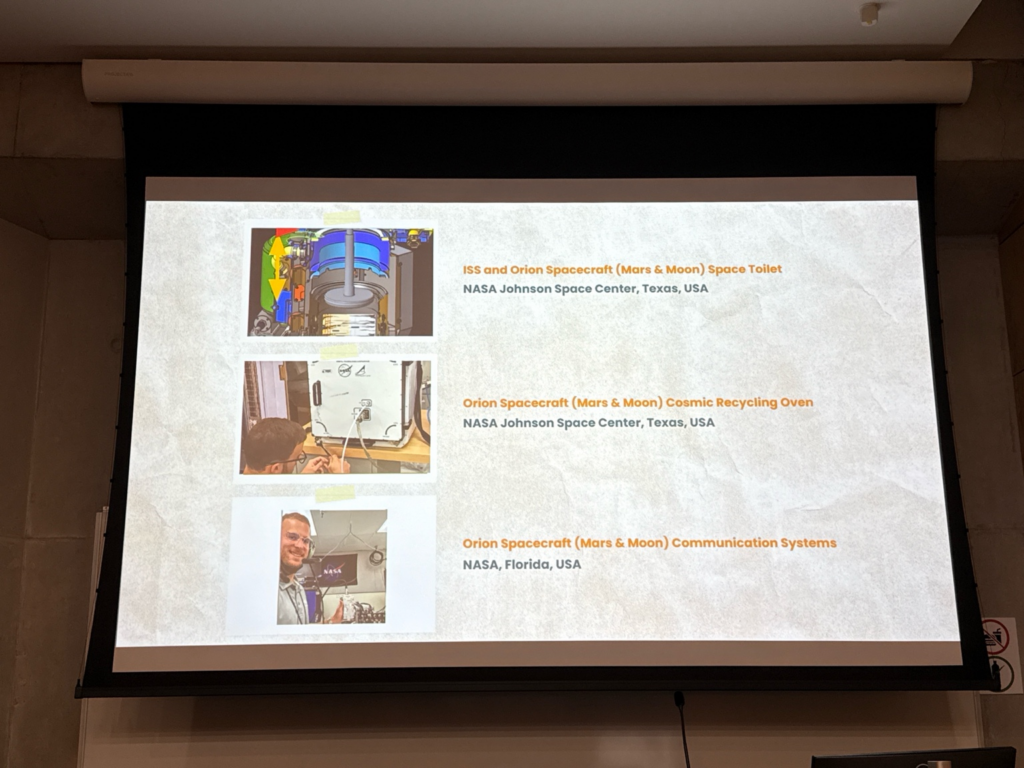
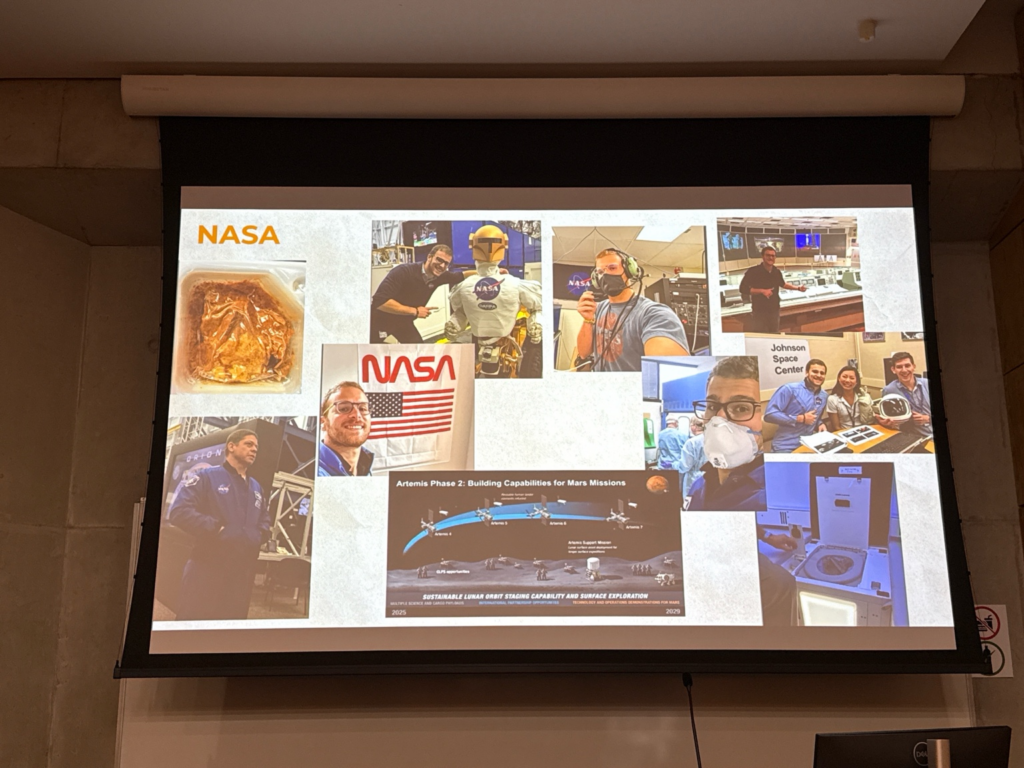
Luis’s story is not the typical “quit everything and travel forever” narrative. He was born in Puerto Rico and trained as an engineer, eventually working for both General Motors and NASA.
He began backpacking seriously in 2019, and travel fundamentally shifted how he saw his career. Rather than abandoning his engineering mindset, he carried it with him into content creation, entrepreneurship, and tourism.
His journey is best summarized as:
NASA engineer → nomadic traveler → multi-business travel entrepreneur
From NASA to Nomad
Luis went from designing systems for spacecraft, astronauts, and Artemis-related missions to traveling to more than 85 countries, launching multiple travel businesses, and organizing sustainable tourism initiatives.
This transition wasn’t impulsive. It was strategic. He emphasized that the same skills required at NASA—planning, testing, iteration, and accountability—are the same skills that allow creators to build sustainable careers.
For anyone considering a career pivot, his story showed that professional skills don’t disappear when you change industries. They compound.
Engineering Journey (And Why It Matters)
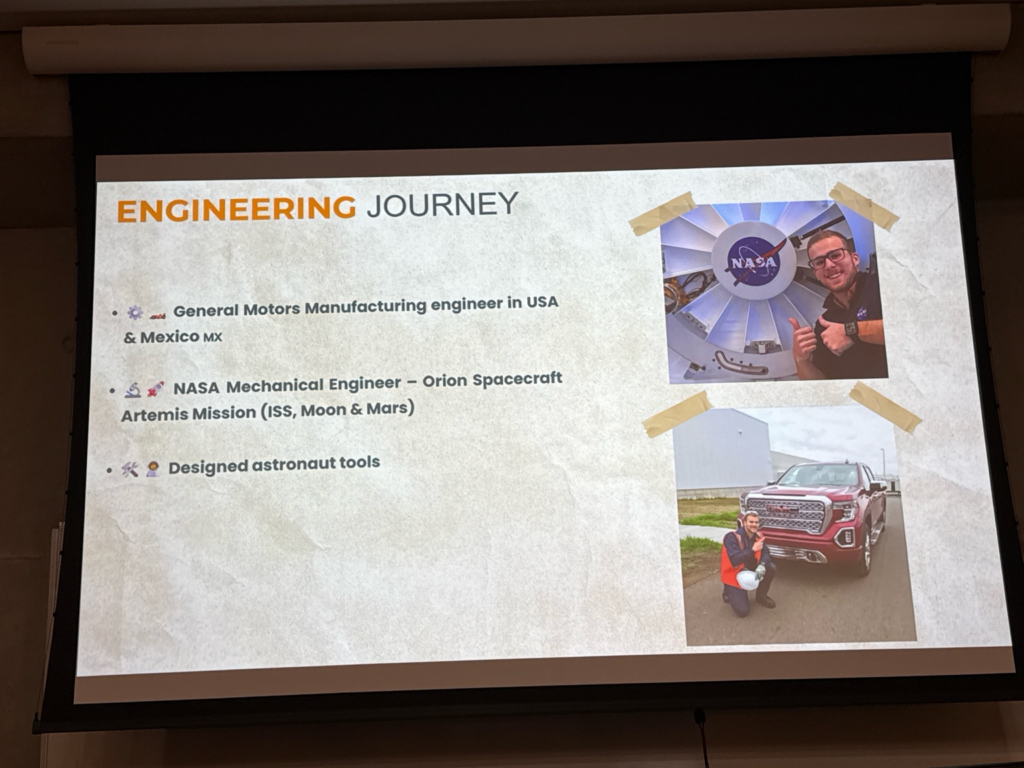
Before becoming a creator, Luis worked as:
- A manufacturing engineer at General Motors (U.S. and Mexico)
- A mechanical engineer at NASA, contributing to Orion spacecraft systems and astronaut tools
The most important takeaway wasn’t where he worked—it was how he worked.
He brought with him:
- Systems thinking
- Testing and iteration
- Data-driven decisions
- Long-term planning
- Problem-solving under constraints
Those habits later became the foundation of his content and monetization strategy.
Using the Scientific Method for Social Media
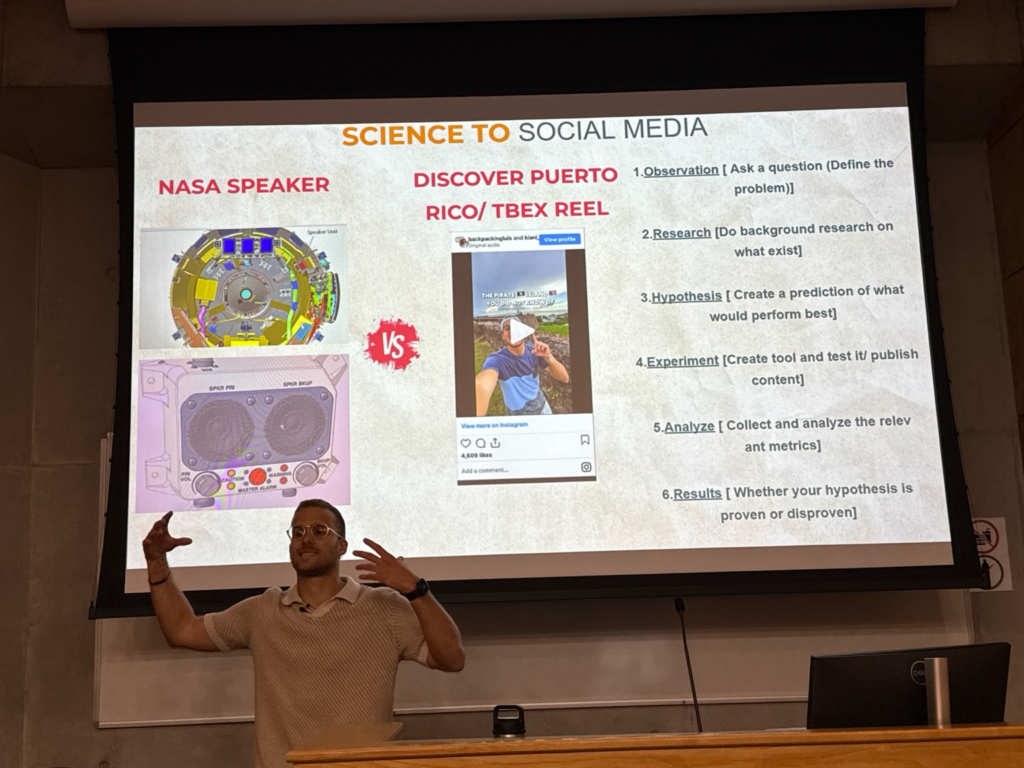
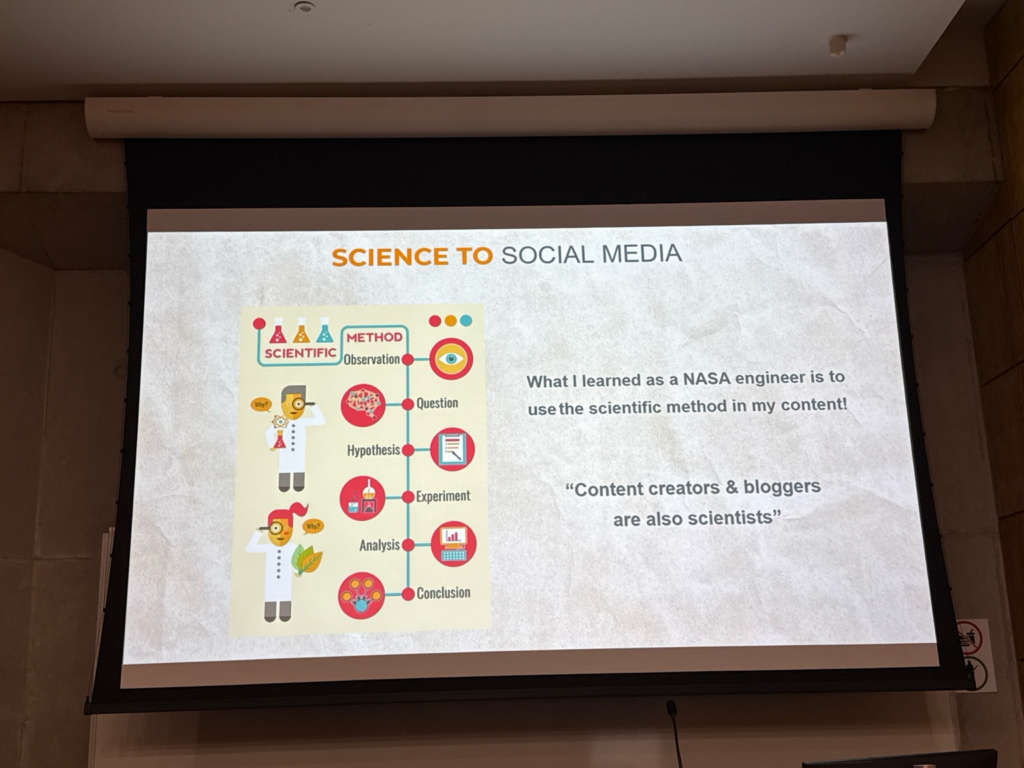
One of the most valuable parts of Luis’s talk was how clearly he linked engineering principles to content creation.
Instead of posting randomly, he treats every piece of content like an experiment:
- Observation: What’s currently working?
- Research: What already exists in this space?
- Hypothesis: What do I think will perform best?
- Experiment: Publish and test
- Analysis: Review performance metrics
- Conclusion: Apply lessons and repeat
His line summed it up perfectly:
“Content creators are also scientists.”
That single idea reframed how I think about blog traffic and social media. Content isn’t a success or failure—it’s data.
The Content Creator Market Reality
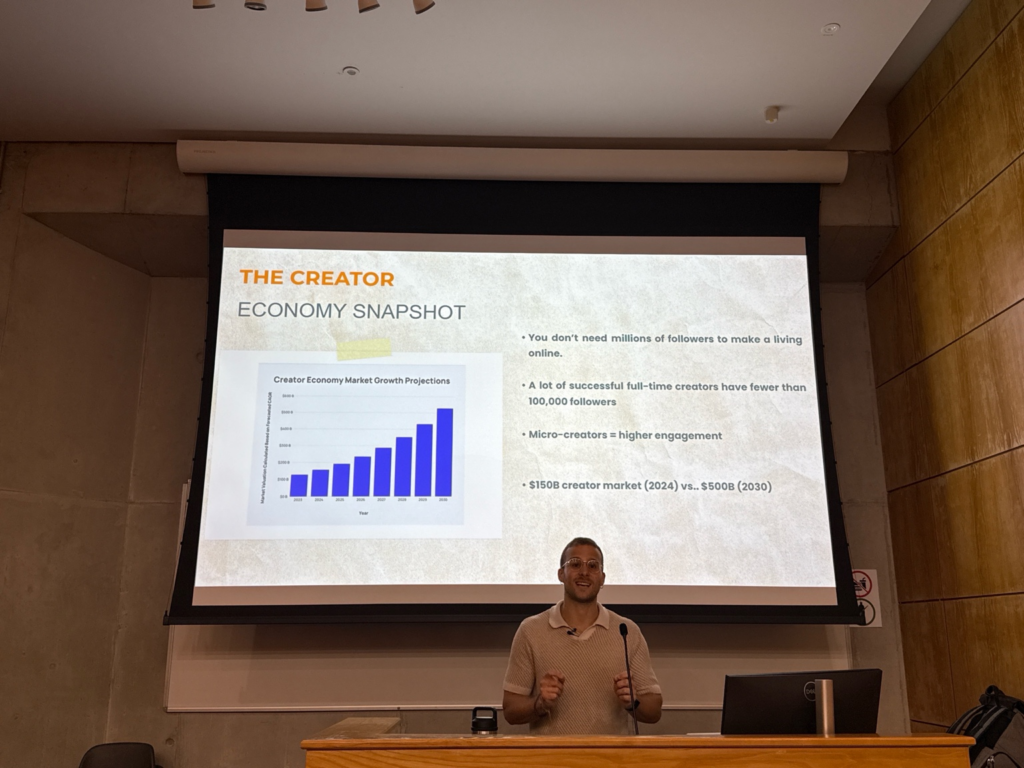
Luis emphasized that you don’t need millions of followers to earn a living.
In fact, micro-creators often perform better because they have:
- Higher engagement
- Higher trust
- Stronger niche authority
- Better conversion rates
He shared that the creator economy is currently valued around $150 billion and is projected to exceed $500 billion by 2030.
The opportunity isn’t disappearing. It’s maturing.
Monetization Framework: Passive vs Active Income
Luis divided monetization into two categories:
- Passive income (assets that earn over time)
- Active income (direct exchanges of time and value)
The key theme throughout was diversification.
Passive Income Streams
Ads
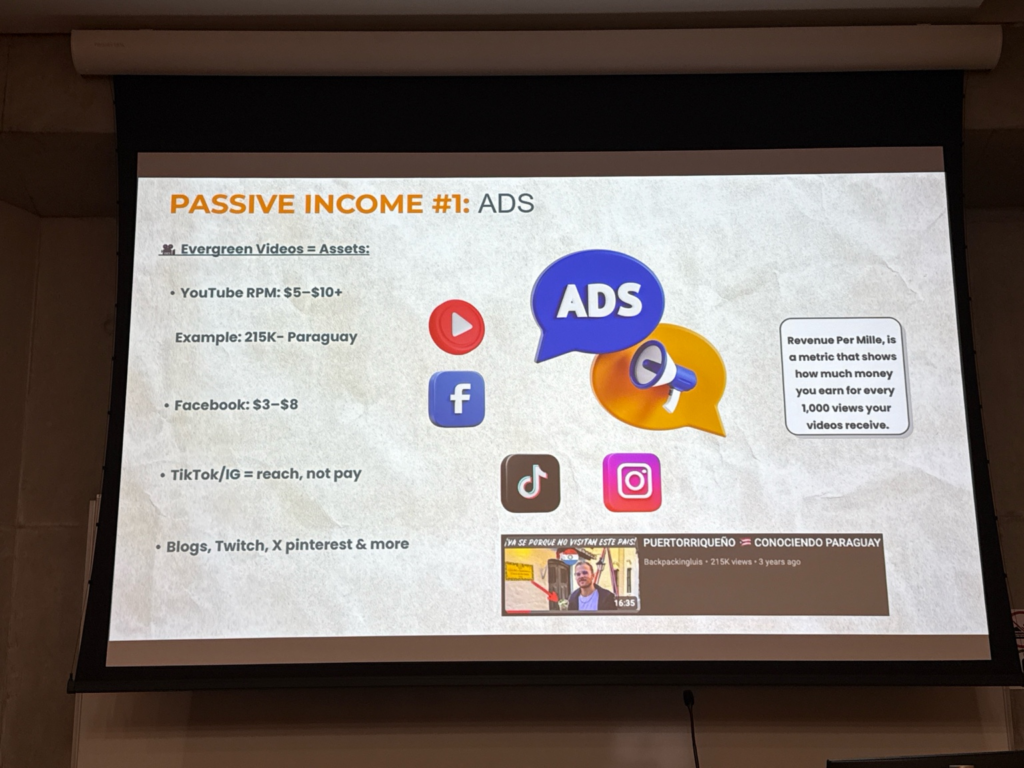
YouTube and Facebook remain the strongest platforms for ad revenue, especially with evergreen content. Luis showed examples of videos that continue earning years after publication.
Key insight:
Evergreen content is an asset, not a post.
Memberships
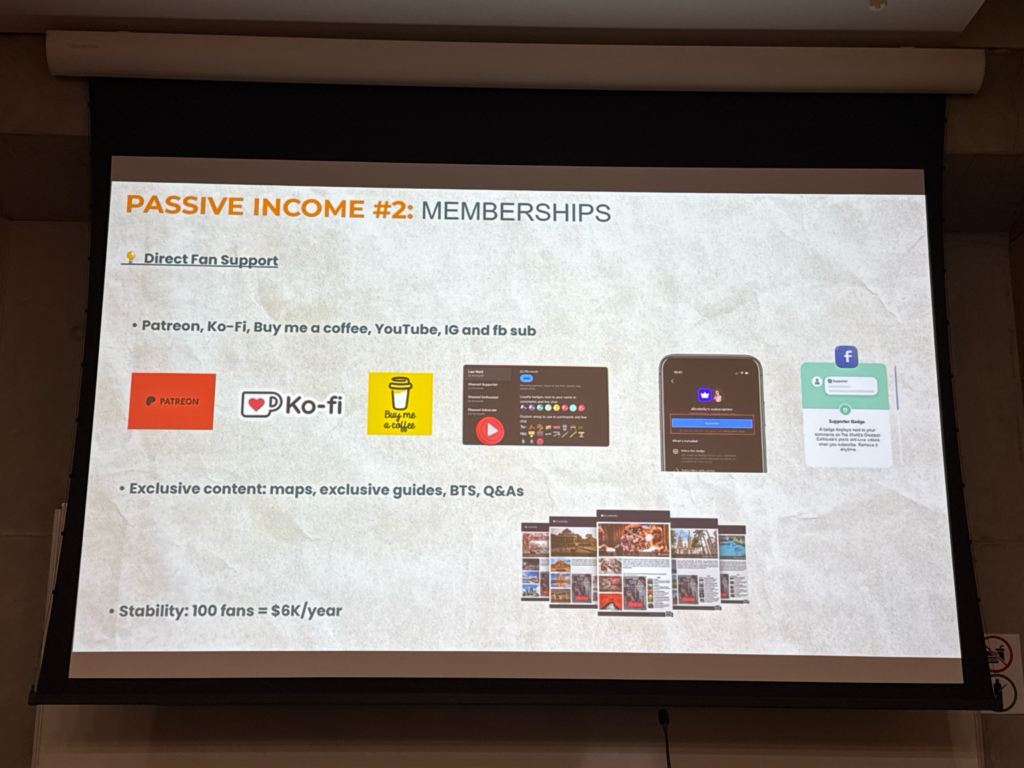
Platforms like Patreon, Ko-fi, Buy Me a Coffee, and platform subscriptions allow creators to build predictable income with small, loyal audiences.
Luis illustrated this simply:
100 people × $5/month = $6,000/year
That’s stability—not virality.
Digital Products
Luis sells:
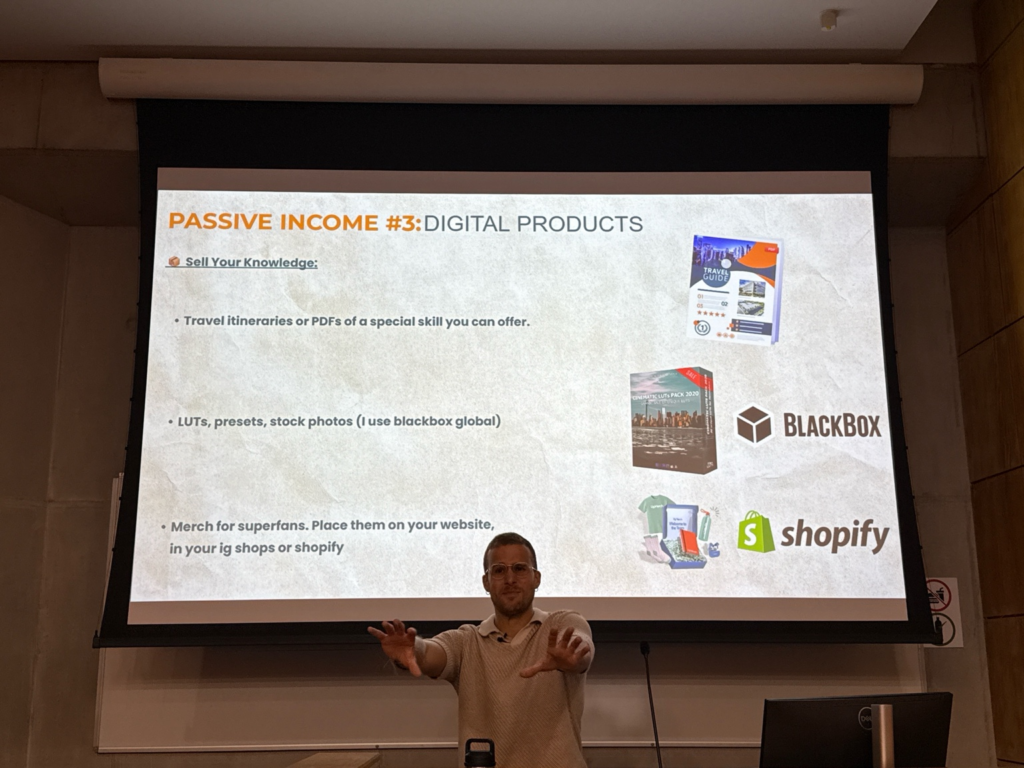
- Travel guides and PDFs
- Presets, LUTs, stock photos
- Merchandise via Shopify
The point wasn’t the product—it was packaging existing knowledge into reusable assets.
For The Cajun Traveler, this directly applies to itineraries, guides, and eventually the Cajun Traveler Cookbook.
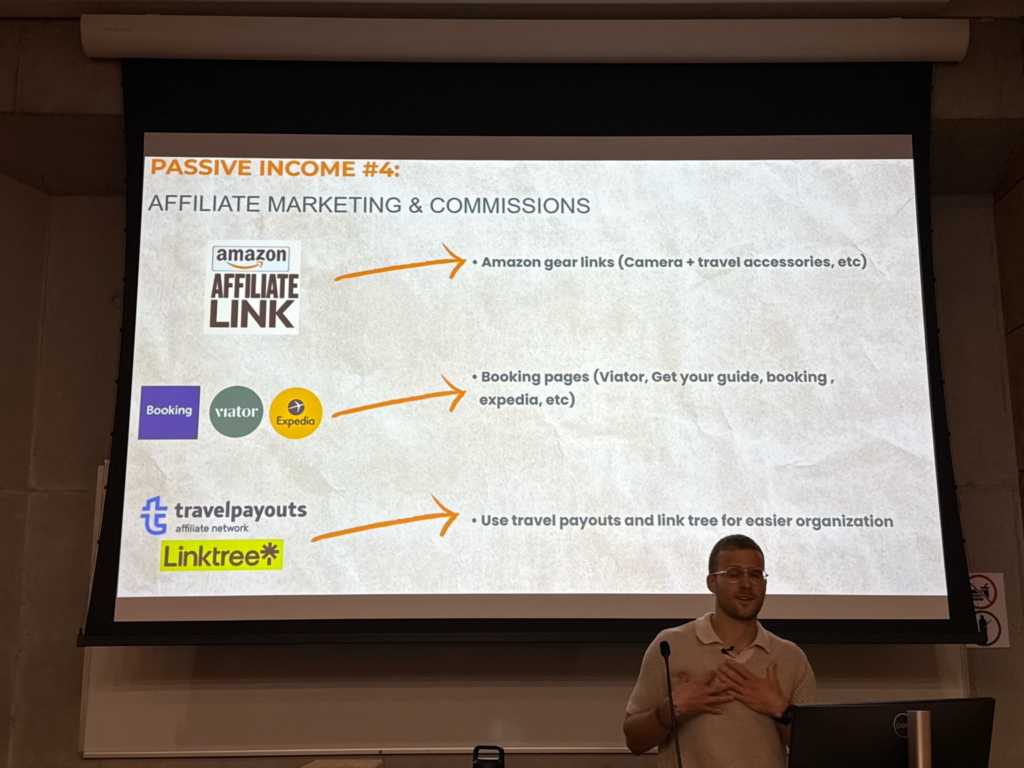
Affiliate Marketing
Luis uses a mix of:
- Amazon
- Booking platforms (Booking.com, Expedia)
- Tours (Viator, GetYourGuide)
- Networks like TravelPayouts
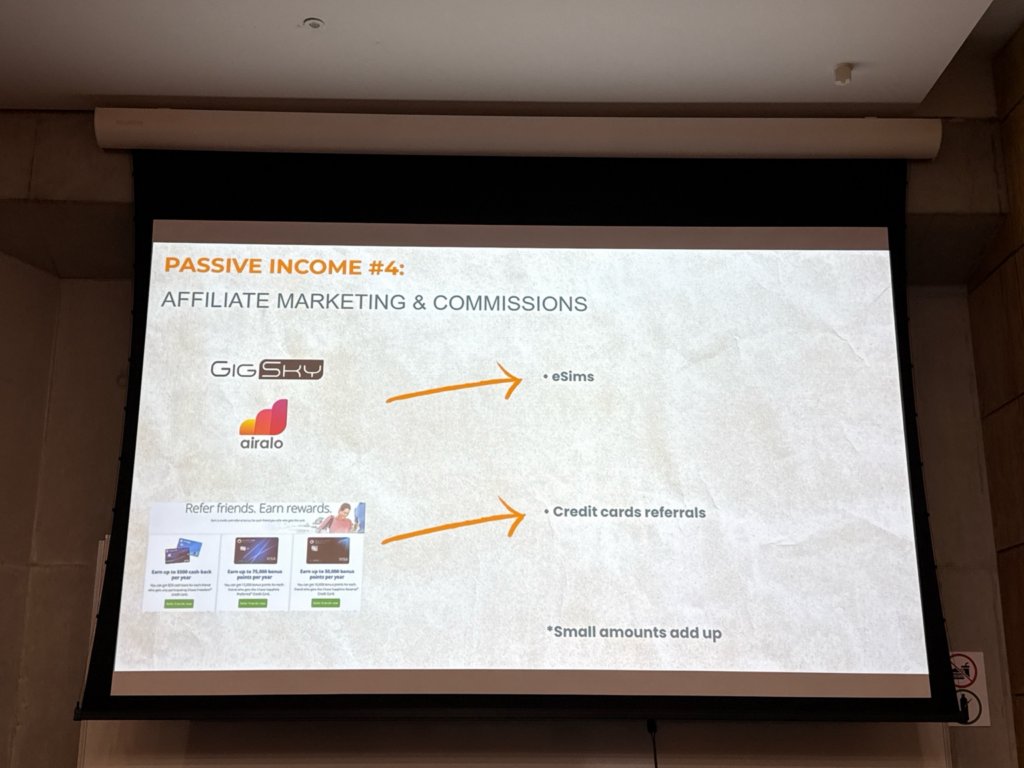
- eSIMs and credit card referrals
His reminder:
“Small amounts add up.”
Affiliate links are digital breadcrumbs that compound over time.
Active Income Streams
Brand Deals
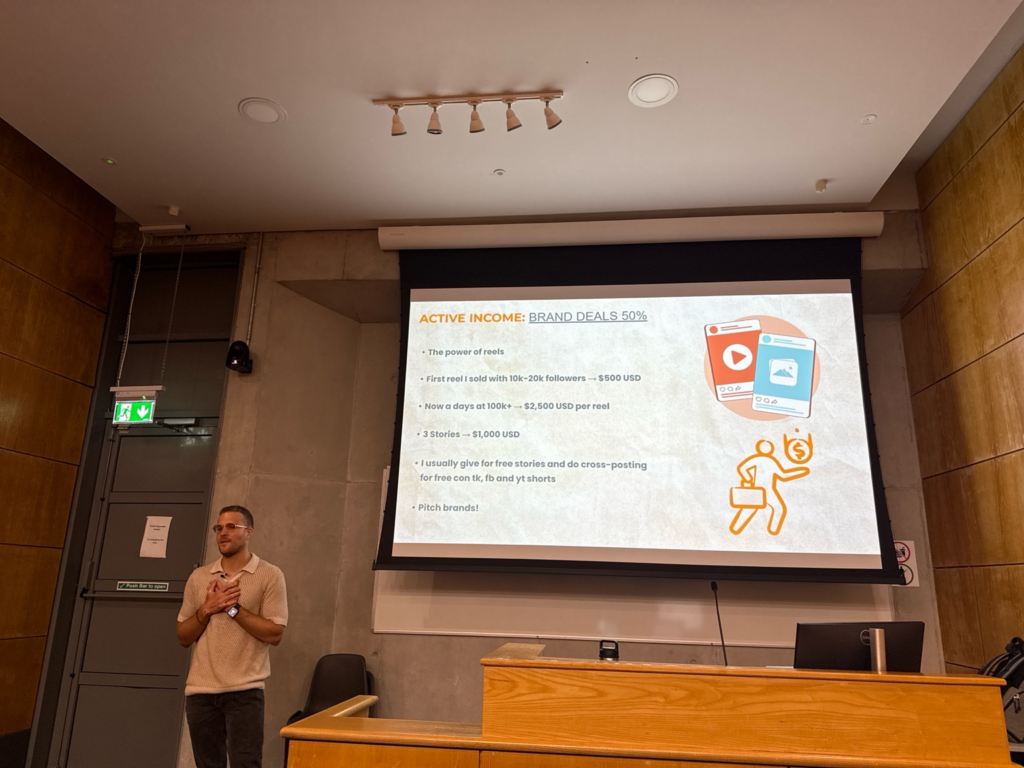
Brand deals make up roughly 50% of Luis’s income.
He shared how his pricing evolved:
- $500 per reel at 10–20K followers
- $2,500+ per reel with a larger audience
His advice was clear:
Pitch brands. Don’t wait to be discovered.
He also cross-posts content across platforms to increase value for partners.
Income Breakdown (Exact Numbers Shared)
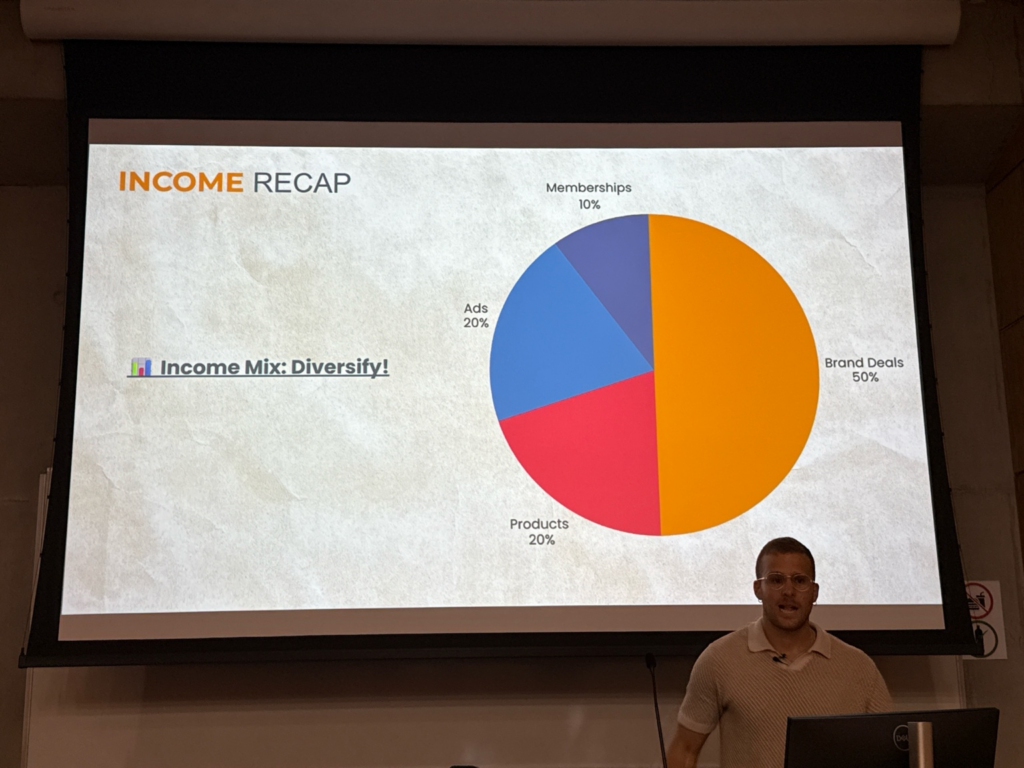
Luis shared his actual revenue mix:
- 50% Brand deals
- 20% Digital products
- 20% Ads
- 10% Memberships
The message was simple:
Never rely on a single platform or income source.
Traveling the World for Free (Ethically)
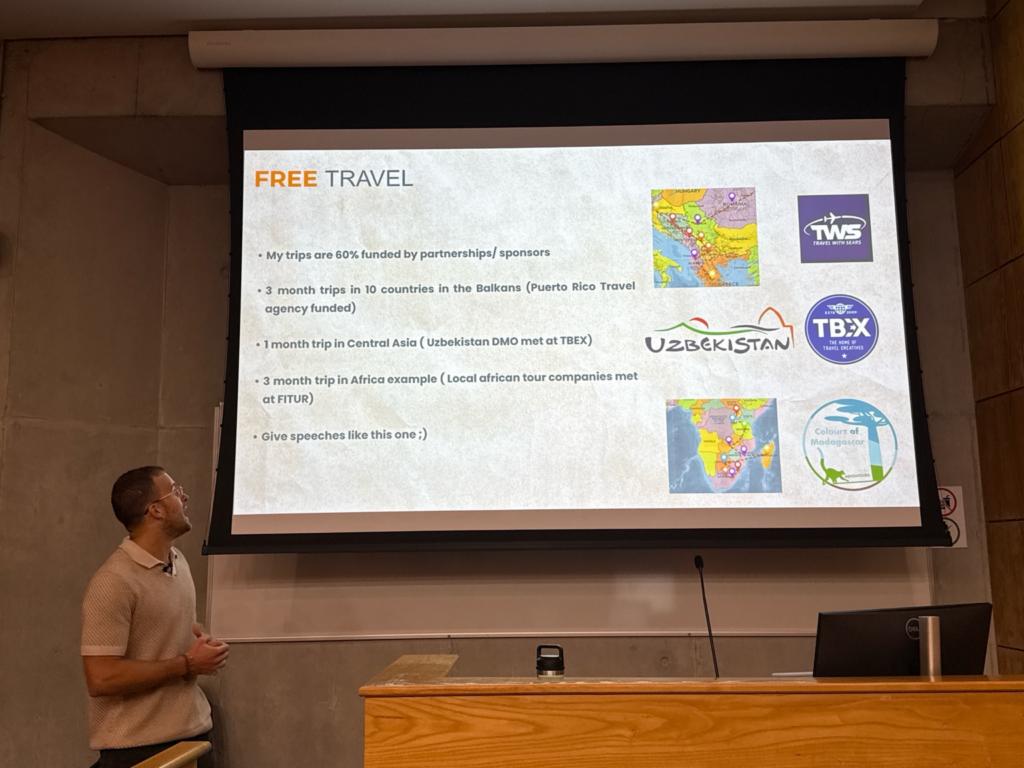
About 60% of Luis’s travel is funded through partnerships.
Examples included:
- Puerto Rico travel agencies
- Uzbekistan tourism board
- Balkan tourism organizations
- African tour operators
- Speaking engagements like TBEX
This wasn’t about freebies—it was about value exchange.
Community First
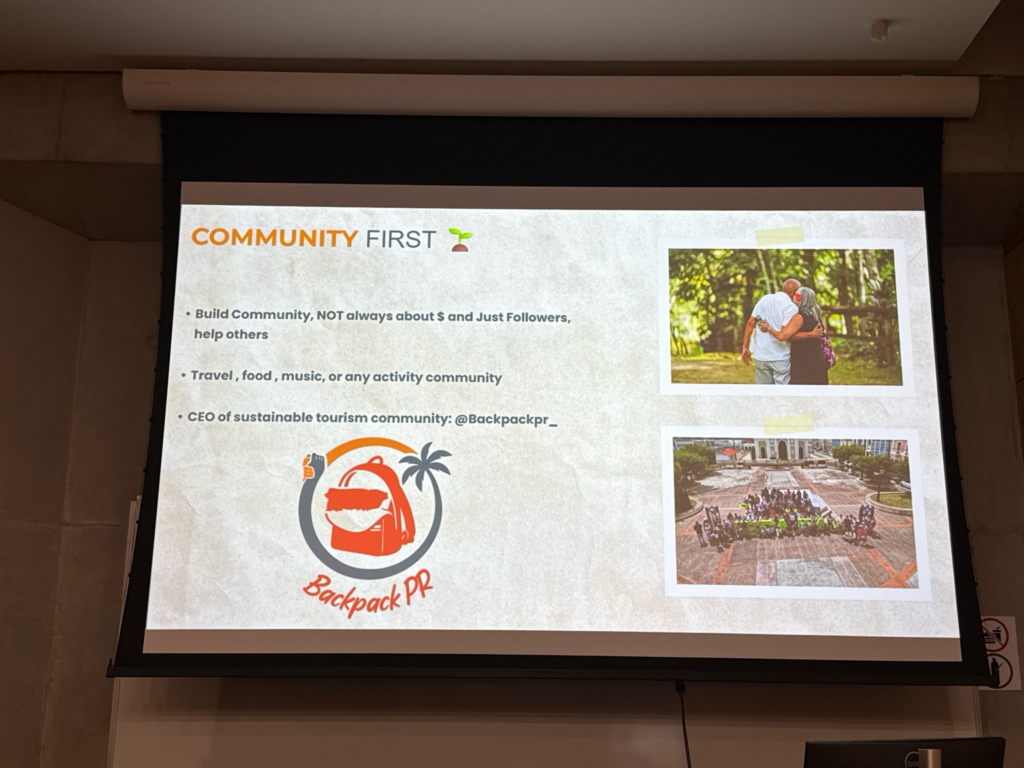
Luis closed by emphasizing that money is not the end goal.
He built a sustainable tourism community in Puerto Rico through Backpack PR, focusing on helping others travel responsibly and amplifying local voices.
His message:
Community over follower count.
That aligned strongly with how I view The Cajun Traveler—as a cultural and storytelling platform, not just a monetization engine.
NASA Lessons Applied to Content Creation
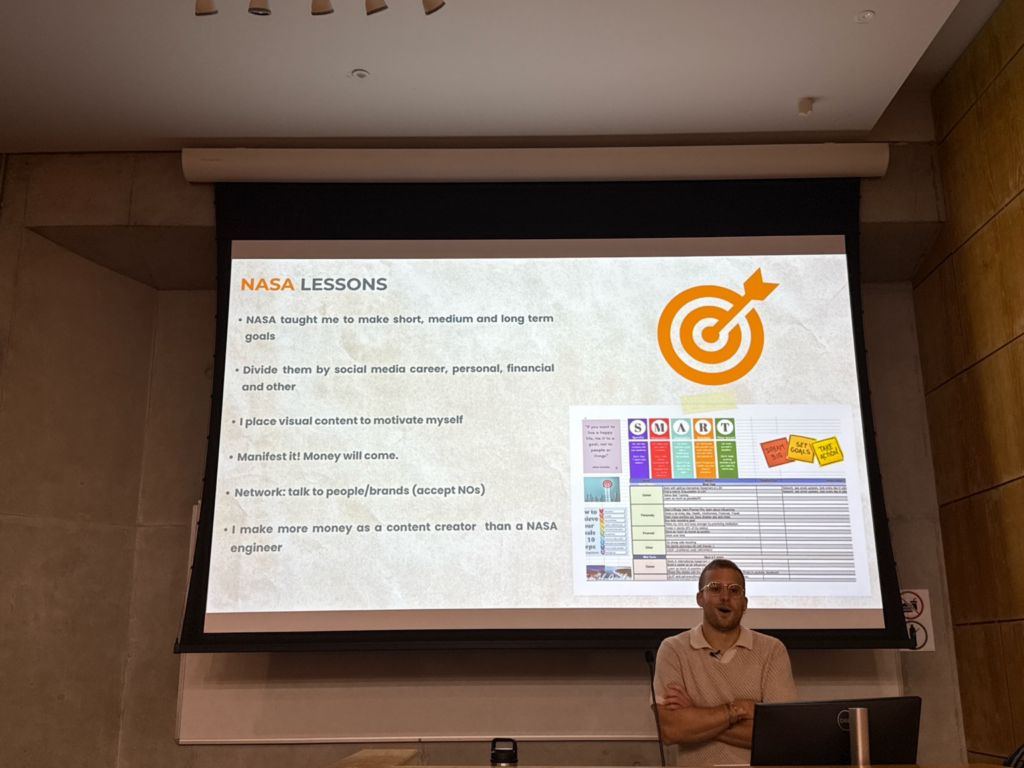
The habits Luis carried forward:
- Short-, medium-, and long-term goals
- Visual planning tools
- Consistency
- Networking
- Accepting rejection
- Long-term thinking
He also shared that he now earns more as a creator than he did as a NASA engineer.
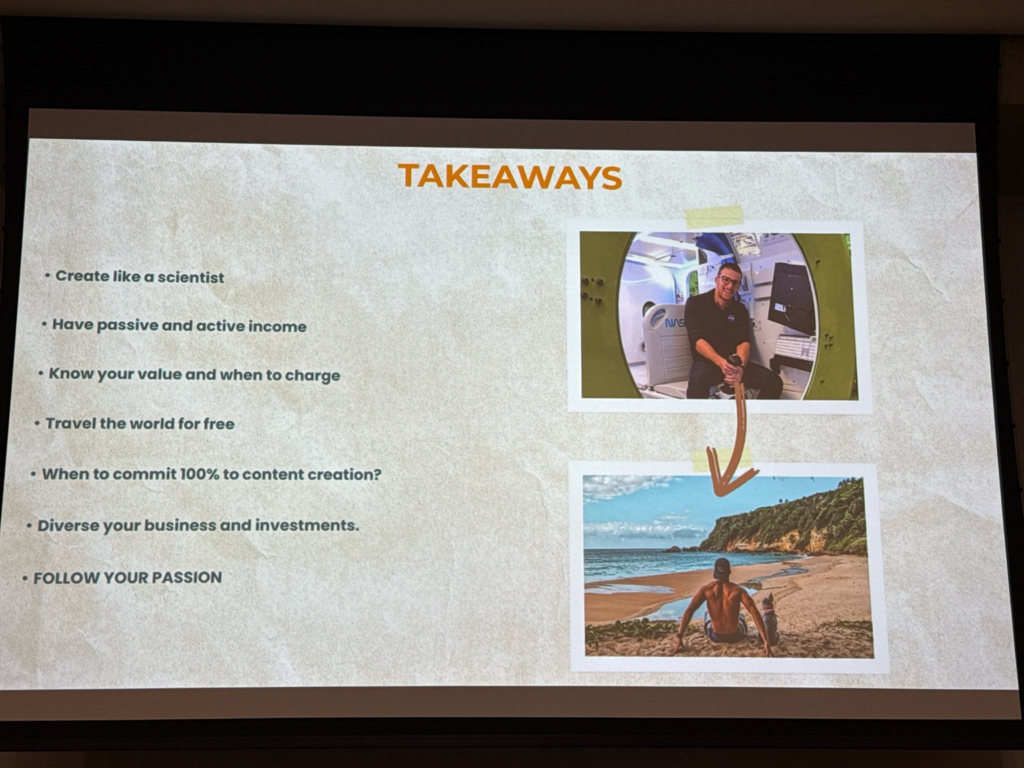
Key Takeaways for The Cajun Traveler Audience
- Create like a scientist
- Build both passive and active income
- Diversify platforms and revenue
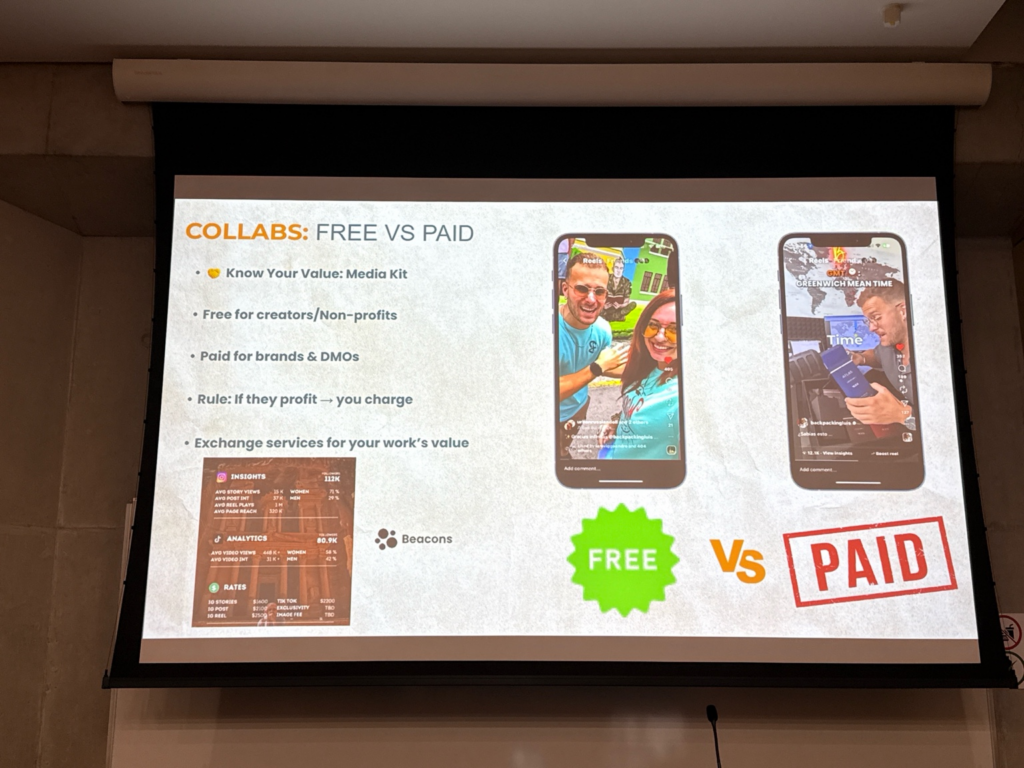
- Know when to collaborate for free—and when to charge
- Use social media to support long-form content
- Don’t go full-time until financially ready
- Stay rooted in purpose and community
For me, the biggest takeaway wasn’t learning something brand new—it was realizing that I’m already doing many of these things. Now I can do them with more structure and intention.
 Follow my blog with Bloglovin